Grand Rapids Chamber Housing Issues Forum: Sable Homes President John Bitely says regulatory hurdles are major obstacles for affordable housing
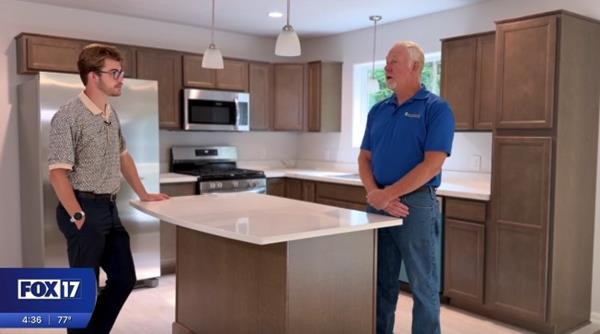
During the Grand Rapids Chamber Housing Issues Forum on June 20, Sable Homes President John Bitely explained that the current residential building environment is extremely difficult.
Bitely, a guest panelist during the forum, said regulatory hurdles are major obstacles for affordable development. He explained to Crain’s Grand Rapids Business that minimum lot sizes are choking his company’s ability to construct homes priced at $250,000 and below, even though that’s the home price tag he’d most like to add to the market to meet demand.
“We are ready to go. It’s just a matter of having small enough lots,” he said during the event. “Unfortunately or fortunately, depending on how you look at it, we are supplying that (price point) by going further out and creating more sprawl.”
Bitely also opposes new state building codes that he describes as overly rigid, and backs a lawsuit the Home Builders Association of Michigan formally filed this month against the state.
“Our communities, even though they will give us lip service, they know we need more reasonably priced homes, when it comes to zoning, when it comes to codes and so on, they stop us behind the scenes at every place they can,” Bitely told FOX 17 after the event.
“What we really need are places that have infrastructure to allow smaller homes on smaller lots, and to allow two units or four units that are connected to each other, that can be sold or rented in the community,” he said.
During the forum, Bitely was joined by Ryan Kilpatrick of Housing Next and state legislators to discuss bipartisan efforts that are underway to help remove cumbersome red tape and boost housing production.
“What we haven’t done very well over the last 20 years is build starter homes for middle-income families,” said Kilpatrick.
A new study found that while Kent County’s projected housing shortfall decreased slightly during the past three years, the county’s building production is still far behind the pace of demand.
The study, conducted by Bowen National Research, found Kent County has reduced its projected shortfall by 2.3%, from 34,699 units by 2027 to 33,914 units by 2030. The findings are part of the newly released 2025 Kent County Housing Needs Assessment from Housing Next, a housing advocacy group for Kent and Ottawa counties.
Since 2022, Kent County has added more than 6,000 housing units, which has slightly reduced the overall housing gap. However, Kilpatrick emphasized the need for specific types of development.
The county’s population is expected to increase by 14% over the next 25 years, putting additional pressure on an already tight housing market.
Housing Next hopes community leaders will use the housing assessment to continue making improvements.
Kilpatrick and Housing Next advocate for a combination of strategies to fill the housing gap. Those include zoning reforms, small-scale development, and the development of multiple housing types beyond single-family homes along corridors with existing infrastructure.
“This is the year that we want significant change across the county landscape,” Kilpatrick said, adding the city of Grand Rapids, Plainfield Township, Wyoming, Kentwood and Ada are all making strides.
State Reps. Kristian Grant and Stephen Wooden, who represent parts of Kent County, and Rep. Luke Meerman, who represents parts of Ottawa and Muskegon counties, are all members of a bipartisan housing task force working to address zoning and building code reforms. A package of bills Grant worked on for more than two years died during the lame-duck session of 2024, but the group is hoping to revive it in an upcoming session.
Grant wants to allow duplexes by right; reform set-back, lot size, unit size and parking requirements; and streamline the requirements for studies and public engagement that add time and money to the housing development process and often kill projects, she said.
“We have a long list of support for this package, and it’s a very bipartisan effort,” Grant said, though she added that opposition still remains.